




CABEZAS RIGIDAS, la narkomentira
Museo Nahim Isaias, Guayaquil, Ecuador, 2017
Curador
Hernán Pacurucu (Ecuador)
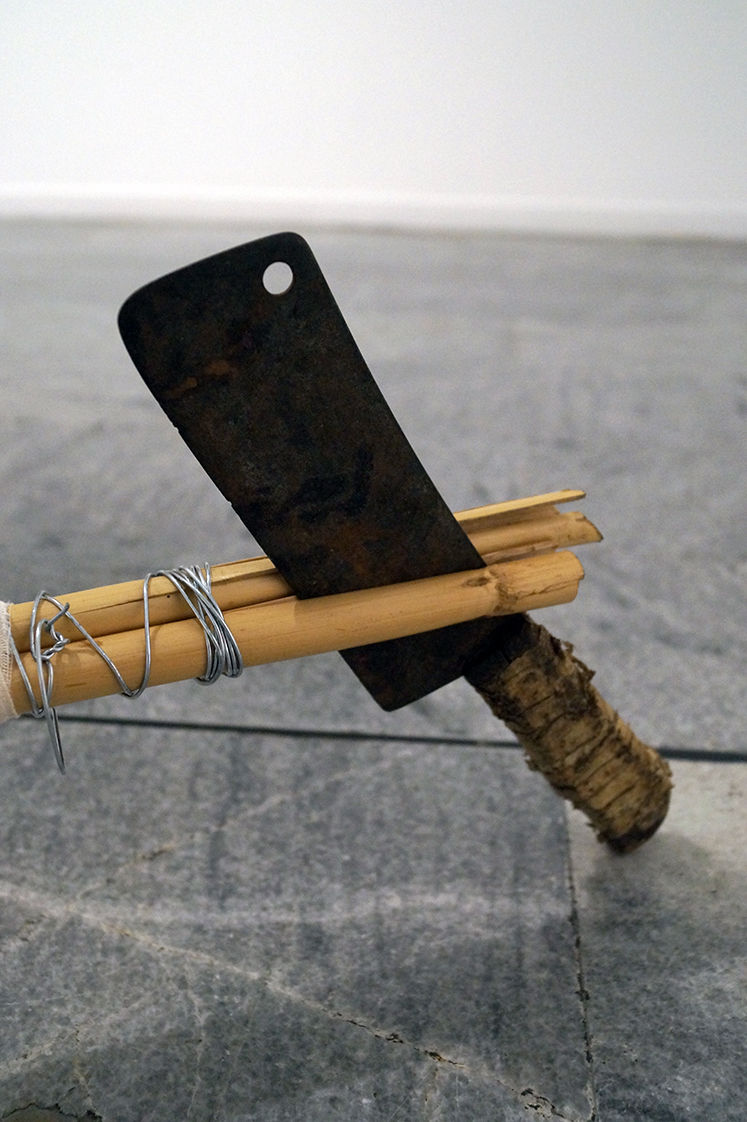
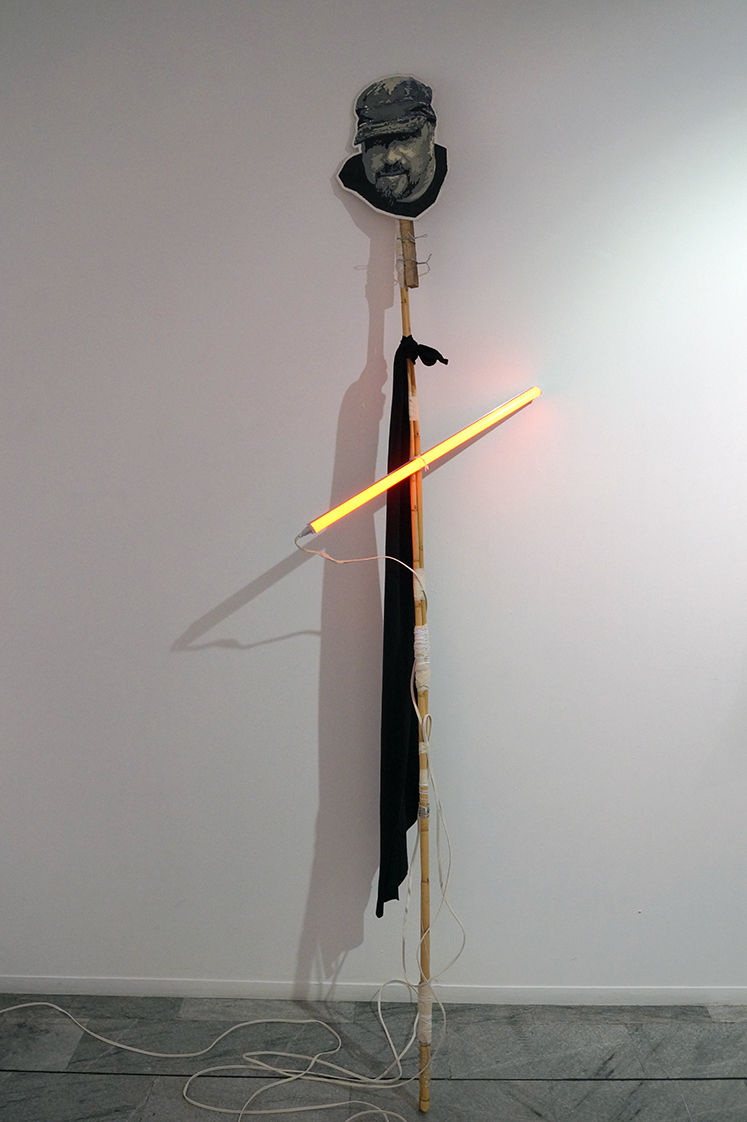
Impresiones digitales, objetos, textos impresos, muñecos en tela, coligue y cuchillos encontrados, pintura sobre impresión, tubo led, telón pintura industrial y costura.
Pinturas sobre papel, cordel, objetos, telas crudas con pintura industrial.
La complejidad que nos presenta su trabajo reside justamente en ello, puesto que nuestra mirada sobre el mundo siempre está forjada por parámetros culturales específicos o criterios morales rígidos. De allí que, al ver la obra del artista, nos desconcierte el no poder dilucidar el bien del mal, la belleza de la fealdad, el odio del amor, el miedo del placer, etc. Efectivamente, los montajes de Bravo siempre buscan confundir estos marcos de representación para mostrarnos que, detrás de tan frágiles categorías, lo que despunta o señorea es la naturaleza acéfala de lo vital.
Su propuesta actual, titulada “Cabezas Rígidas”, no se aparta de los principios recién enunciados, sino que los emplaza desde una perspectiva biopolitica particular y específica. Me refiero a que el conjunto de imágenes elegidas por el artista, así como los objetos y el diagrama militar que los contiene, aluden directamente a horrorosos hechos históricos y a eventos contingentes de violencia.
CABEZAS RÍGIDAS, La Narkomentira
Nahim Isaias Museum, Guayaquil, Ecuador, 2017
Curator
Hernán Pacurucu (Ecuador)
Digital prints, objects, printed texts, fabric dolls, coligüe cane and found knives, painting on prints, LED tube, industrial-painted backdrop and sewing.
Paintings on paper, cord, objects, raw fabrics with industrial paint.
The complexity of his work lies precisely in this, since our perception of the world is always shaped by specific cultural parameters or rigid moral criteria. Hence, when confronted with the artist’s work, we are unsettled by our inability to distinguish good from evil, beauty from ugliness, hatred from love, fear from pleasure, and so forth. Indeed, Bravo’s installations constantly seek to disrupt these frameworks of representation, revealing that behind such fragile categories, what ultimately emerges or presides is the acephalous nature of the vital.
His current proposal, entitled “Cabezas Rígidas” (Rigid Heads), does not depart from the principles outlined above; rather, it situates them within a particular and specific biopolitical perspective. I mean by this that the ensemble of images selected by the artist, as well as the objects and the military diagram that contains them, directly allude to horrific historical events and contingent episodes of violence.